Showing posts with label tradition. Show all posts

Monday, March 30, 2015

Serbian Easter- the most joyful day of Spring!


In most Slavic languages, the name for Easter either means "Great Day" or "Great Night" (Polish, Slovak, Ukrainian, Bulgarian, and Belarusian). In Serbian, however, the day's name reflects a particular theological connection: it is called Uskrs, meaning "Resurrection". It also explains the fact that in Serbian Easter is sometimes also called Vaskrs, a liturgical form from  Church Slavonic.

In a religious tradition, families are having their baskets of coloured eggs blessed by the parish priest. Usually, the eggs are red, symbolizing happiness, joy, rebirth and the blood of Christ. Families exchange eggs and say, Hristos Voskrese (Christ is risen). The response is Voistinu Voskrese (Indeed He has risen).


The main thing in the Serbian celebration of Easter is the egg, the symbol of a new life. Easter eggs in Western Europe can be made of chocolate and sold in supermarkets. Like here, in Spain. However, Serbs use ordinary chicken eggs at Easter, boiling them at home on Friday, which is called Big Friday.


While the Easter weekend is the climax of the celebration, for many Serbs the festivities start on Lazar’s Saturday, April 16th. On that day, church floors are covered for the afternoon liturgy with the flower known as vrbica, or in English-  purple loosestrife.
During the ceremony, the priest blesses the flowers and shares them with believers.
This day marks Jesus’ entry into Jerusalem. Vrbica is a Serbian version of the palm fronds that children laid down on Jesus’ path. Believers also make corona out of vrbica flowers and place them on their front doors. The tradition is dyeing the first set of eggs in red and saving one of them aside until next Easter. That egg is called the housekeeper, referring to the belief that the egg will help to protect the home.


Although coloured dyes for the eggs can be bought in the market, most people still dye at least 10 eggs by boiling them with onion.
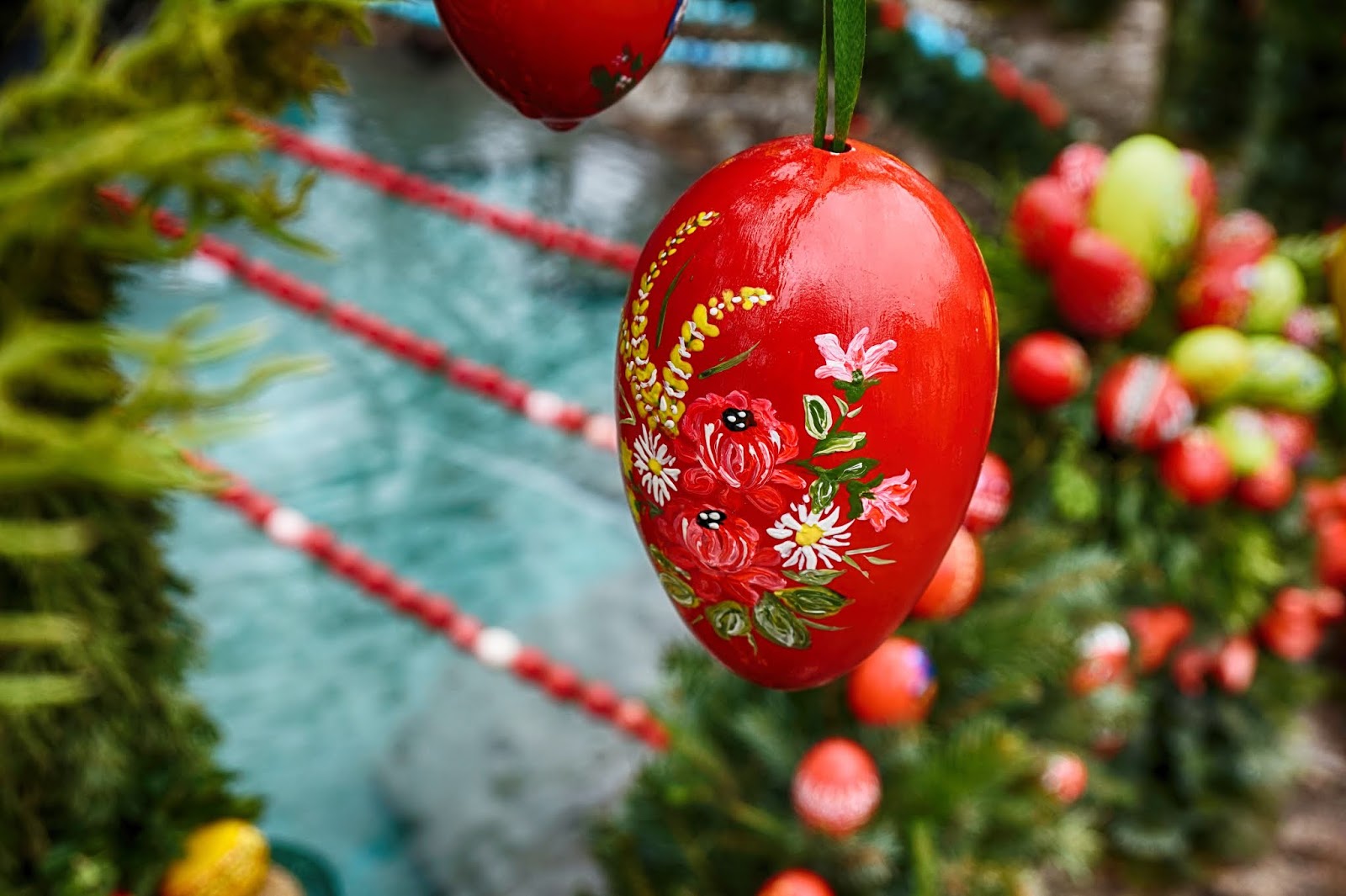
The onion gives eggs a nice caramel colour. And if you want to create a decoration on the egg, just draw on it with wax before boiling. But that's just one of the egg colouring tricks and technics.

Easter bunnies are becoming more popular all over the world, but the animal that truly symbolises Easter in a religious manner for Serbs is the baby chick – the natural product of the egg.


Big Friday Mass is performed in front of a replica of Jesus’ cover, symbolising the removal of the body from the cross.
Saturday is reserved for decorating homes. 
Easter Sunday starts with bells ringing in churches through the country. 

In the Orthodox tradition, believers give up certain 
foods during the 40 days up to Easter.
After morning liturgy families have breakfast together and play the game of tucanje, which involves cracking eggs against each other to see which one breaks first.


Most Serbs spend Easter on visiting friends and family. But also those Serbs which are not religious, still paint eggs on a Big Friday and for sure everybody gives gifts on a Big Sunday and play tucanje. For kids, it's always a joy to celebrate Easter because it is said that gifts are brought by Easter Bunny. It's like Santa Claus for a Christmas. Bunny usually gives toys, sweets, even money and some painted eggs in a basket. And he hides a basket in the grass so children must look for a present. Similar to Christmas socks where Santa is leaving his gifts.


Bottom line, it's a joyful holiday, especially for children, but its a Spring Christmas for all! While children are waiting to search for their gifts, parents are showing to neighbours and friends how lovely egg decoration they have this year! 


Friday, March 13, 2015

Carnival in La Seu

In honour of the spring, let's make one article about saying Goodbye to winter in a really nice way.
The Carnival.


The Carnival is held every year in February. This festival has its origins in ancient feasts in honour of the winter, celebrating both Romans and Greeks. There are several explanations for the etymological meaning of the word carnival, from the end of eating meat, to the festivities in honour of Indo-European gods.


The carnival has become a festival full of colour and costumes where each person can embody the most colourful character. Normally, gives importance to the originality of the costumes, the more unusual the better. The carnival is celebrated in the street among people who are having diet restriction.

Apparently, for 40 days (exactly like for a Serbian Eastern ) until the arrival of Palm Sunday, you could not eat meat.


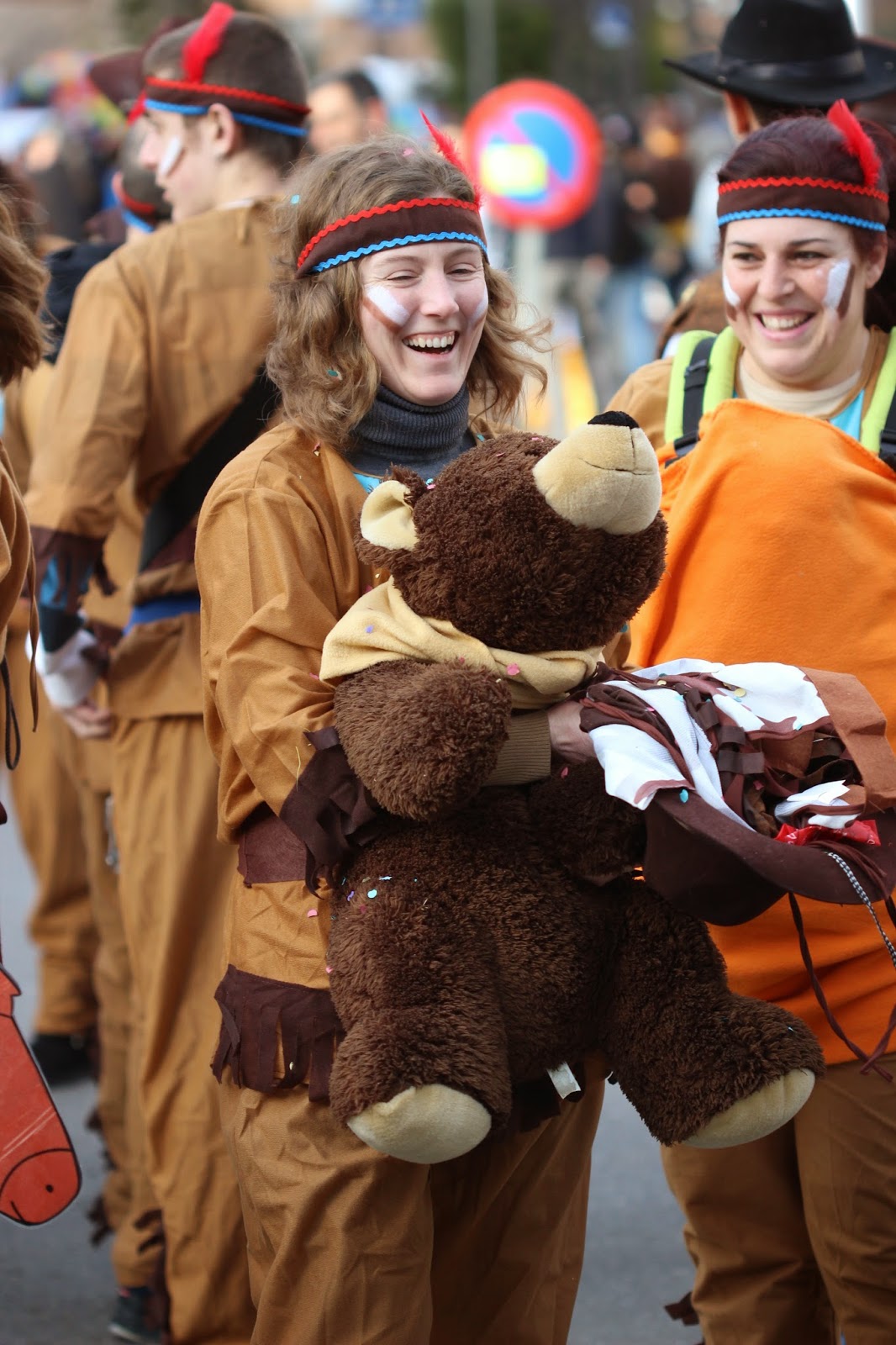
Carnival celebrations are held throughout the peninsula and has become a tradition passed from parent to child. Also in schools promote this festival making smaller disguise themselves from very early ages. As you can see on the photos! It was really a joy for me to see all those families with creative costumes walking on the street, singing and having fun. That day, I can say there was a lot of laughs sharing across the streets of La Seu.


Photography by.mARTina malesev

Wednesday, January 7, 2015

Serbian Orthodox Christmas


There are many, complex traditions associated with the Christmas holidays. They are most likely to be seen in their purest form in large, extended families around the world. They slightly vary from place to place. I will talk just about a few symbolic old costumes.


The Serbian name for Christmas is Božić
Christmas for Serbs who are Christian Orthodox comes two weeks later than Christmas of Roman Catholics. Serbs do not celebrate Christmas on December 25th, but on January 7th, while they celebrate New Year on January 13th rather than on December 31st. This is because the Serbs follow the Julian calendar, while Roman Catholics follow the Gregorian calendar.


The Serbian name for Christmas Eve during the day is Badnji dan. 
Groups of young people go from house to house, congratulating the holiday, singing, and making performances; this continues through the next three days.
Early in the morning the head of each family, usually accompanied by several male relatives, selects and fells the tree from which a log will be cut for their household. The group announces its departure by firing guns or small celebratory mortars called prangija. The Turkey oak is the most popular species of tree selected in most regions, we call it Badnjak. The moment when the badnjak burns through may be marked with festivities, such as the log being kissed by the head of household, and wine being poured over it accompanied by toasts. A reward may be given to the family member who was the first to notice the event, and in the past, the men would go outside and fire their guns in celebration.
Since the early 1990s, the Serbian Orthodox Church has, together with local communities, organized public celebrations on Christmas Eve. There are typically three elements to such celebrations: the preparation, the ritual, and the festivity. The preparation consists of cutting down the tree to be used as the badnjak, taking it to the church yard, and preparing drink and food for the assembled parishioners. The ritual includes Vespers, placing the badnjak on the open fire built in the church yard, blessing or consecrating the badnjak, and an appropriate program with songs and recitals. In some parishes, they build the fire where they to burn the badnjak not in the church yard, but at some other suitable location in their town or village. The festivity consists of gathering around the fire and socializing.


Once the badnjak and straw have been taken into the house, the Christmas Eve dinner may begin. The head of household makes the Sign of the Cross, lights a candle, and censes the whole house. 
Before the table is served, it is strewn with a thin layer of straw and covered with a white cloth. The family members sit down at the table. Prior to tucking in, they all rise and a man or boy among them says a prayer or they together sing the Troparion of the Nativity in Church Slavonic language.


Christmas Eve is a fast day, the dinner is prepared in accordance with that, but it is copious and diverse in foods. Besides an unleavened loaf of bread called badnjački kolač, and salt, which are necessary, this meal may comprise e.g. roast fish, cooked beans, sauerkraut, noodles with ground walnuts, honey, and wine. It used to be served in some villages on a sack filled with straw, with the family seated around it on the floor. An essential feature of Christmas dinner is a česnica, which is a round loaf of bread. Dough for česnica is made with strong water. While it is kneaded, a golden or silver coin is put into it. Some people put also little objects made of cornel wood, representing chickens, oxen, cows, swine, bees, etc. 
In addition to  česnica, other kinds of Christmas loaves may be regionally baked, each with its specific name and purpose within the celebration. The božićni kolač, meaning Christmas cake, is despite its name a round loaf of bread. Before baking, a Christogram is impressed on its upper side with a wooden seal. For each male member of the family  round loaf named ratarica is made – the biggest one for the head, and the smallest one for the youngest boy.


It is a custom in Banat (the region where I was born) that, after Christmas Eve dinner, groups of children go from house to house of their neighbourhood and sing to neighbours. This custom is called korinđanje, and children who participate in it are called korinđaši. They knock on a neighbour's door or ring the doorbell; when the neighbour comes out they greet him and ask if they are allowed to sing. If the answer is affirmative, they sing a children's ditty, as a reward, the neighbour gives them candies or even money; more traditional gifts include walnuts, prunes, apples, and cakes. A bit similar to international holiday Halloween.

Gift giving on Christmas is not a Serbian tradition—instead, gifts are given on the three Sundays before Christmas Day. These three holidays are called Detinjci or Djetinjci, Materice, and Oci. Children give gifts on Detinjci, married women on Materice, and married men on Oci. But in fact, in modern time for Christmas day, we give symbolic gifts and bigger present it is left for New Year's Eve, as an influence from a culture in the West.


https://www.youtube.com/watch?v=z-Z1IXzZjJc